-
tel:
+86-13606193016 -
email:
info@suhangmachine.com

How Width Adjustable Roll Forming Technology Supports Flexible Drywall Framing Production
Sep 17, 2026
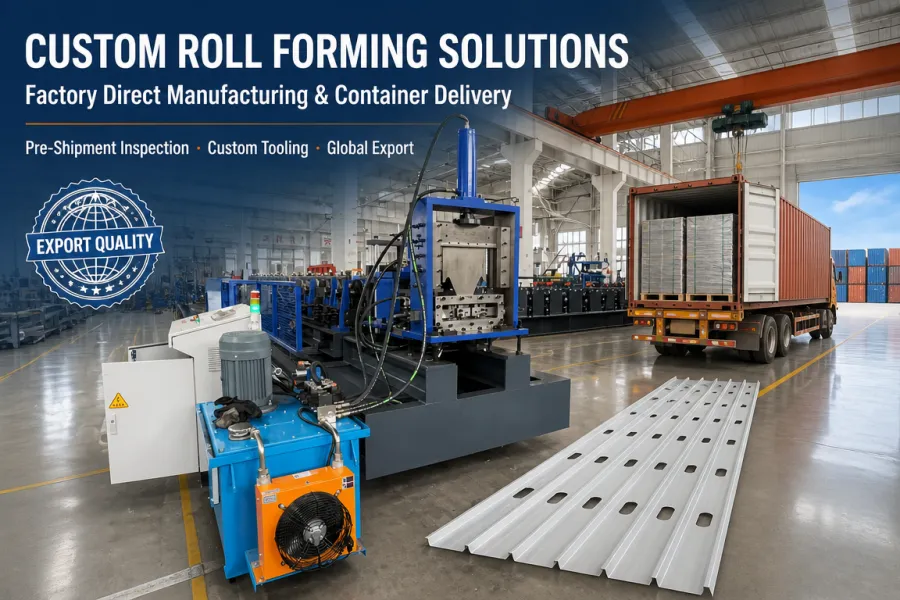
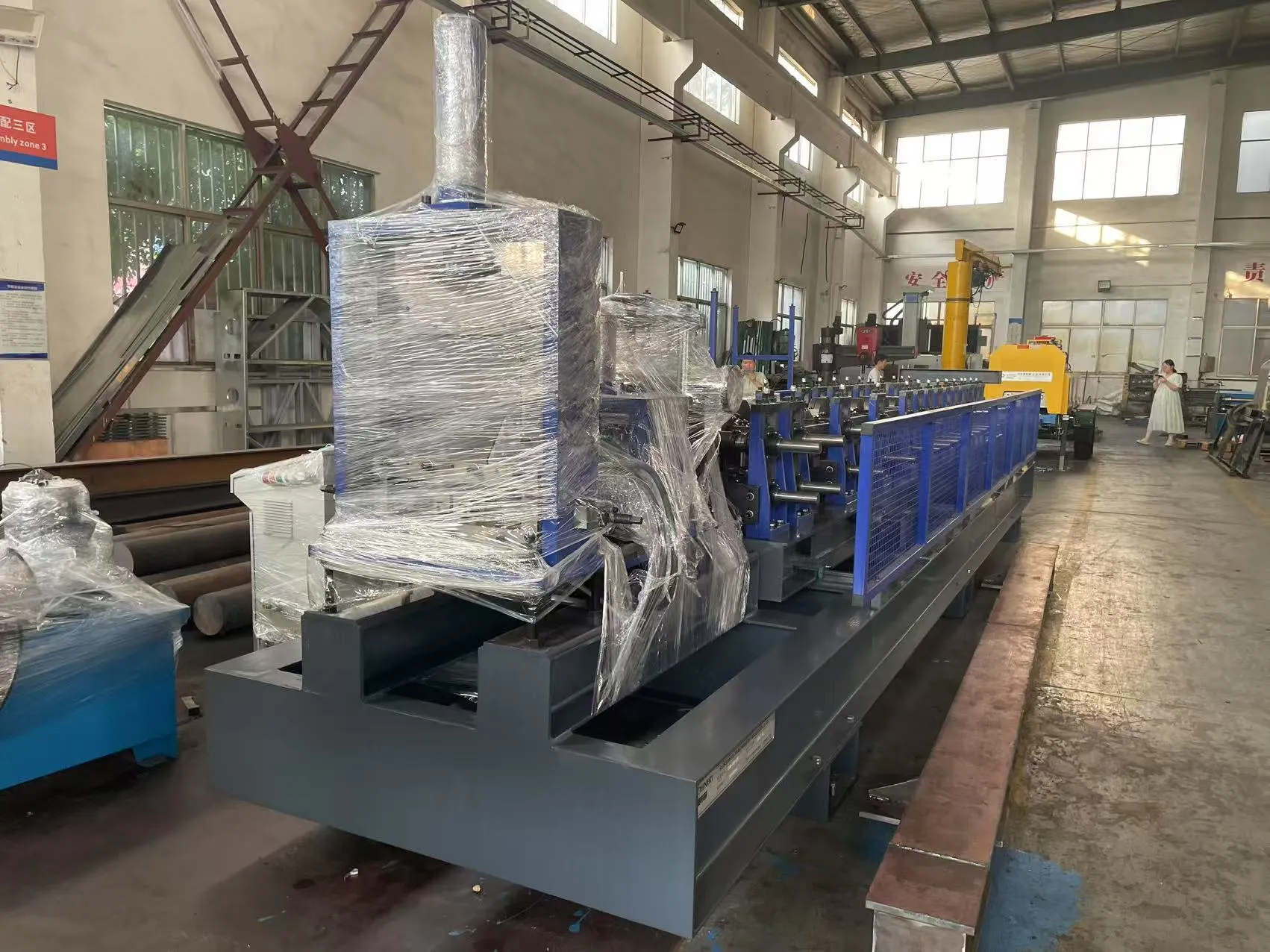
On September 16, 2026, a width adjustable CU stud and track drywall roll forming machine was being loaded into a shipping container at the Sussman Machinery factory in China. After transportation to Shanghai Port, the machine will be shipped by sea to Mexico.
The equipment is designed around a production requirement that is becoming increasingly important for steel framing manufacturers: the ability to manufacture different profile dimensions without dedicating a separate fixed production line to every size.
The machine can automatically adjust its width from 90 mm to 203.2 mm, covering approximately 3-1/2 inches to 8 inches. Its automatic height adjustment range is 41.3 mm to 63.5 mm, equivalent to approximately 1-5/8 inches to 2-1/2 inches. The machine is designed to process steel with a thickness between 1 mm and 2 mm.
These specifications place flexibility at the center of the machine's design. For CU stud and track manufacturers, this capability can affect everything from product planning and tooling requirements to factory space and response time for different orders.
The Changing Requirements of Steel Drywall Framing
Drywall construction relies heavily on standardized framing components, but "standardized" does not necessarily mean that every project uses exactly the same dimensions.
Wall height, partition design, load requirements, acoustic requirements, building codes, construction systems, and customer specifications can all affect the selection of framing components.
As a result, a manufacturer may need to supply several CU stud and track dimensions instead of producing one universal size.
This creates a challenge for fixed roll forming equipment.
A conventional fixed machine is optimized around a particular profile configuration. This can be highly effective when production volume is concentrated on one size. However, when a manufacturer needs to switch among several widths and heights, fixed equipment may require more machines, additional tooling, or more complicated production arrangements.
An adjustable machine takes a different approach by making dimensional change part of the production system itself.
The machine being shipped to Mexico on September 16 was designed for this type of manufacturing environment.
Understanding the 90-203.2 mm Width Range
The automatic width range of 90 mm to 203.2 mm is one of the machine's defining specifications.
At the lower end, the machine can produce framing configurations around 3-1/2 inches wide. At the upper end, it can accommodate dimensions up to 8 inches.
This is a substantial range for a single production platform.
From a factory-management perspective, the value of a broad width range is not simply that the machine can produce more sizes. It also changes how production capacity can be organized.
Suppose a manufacturer receives orders for several framing dimensions during the same month. With multiple fixed machines, each machine may be assigned to one profile, and production planning becomes closely connected to machine availability.
With an adjustable machine, production can potentially be reorganized according to the order schedule.
For example, one production period can be dedicated to a narrower CU stud and track size, followed by a wider configuration. The same machine remains the main production platform while the profile dimensions are changed through the adjustment system.
This creates a different relationship between equipment and product range.
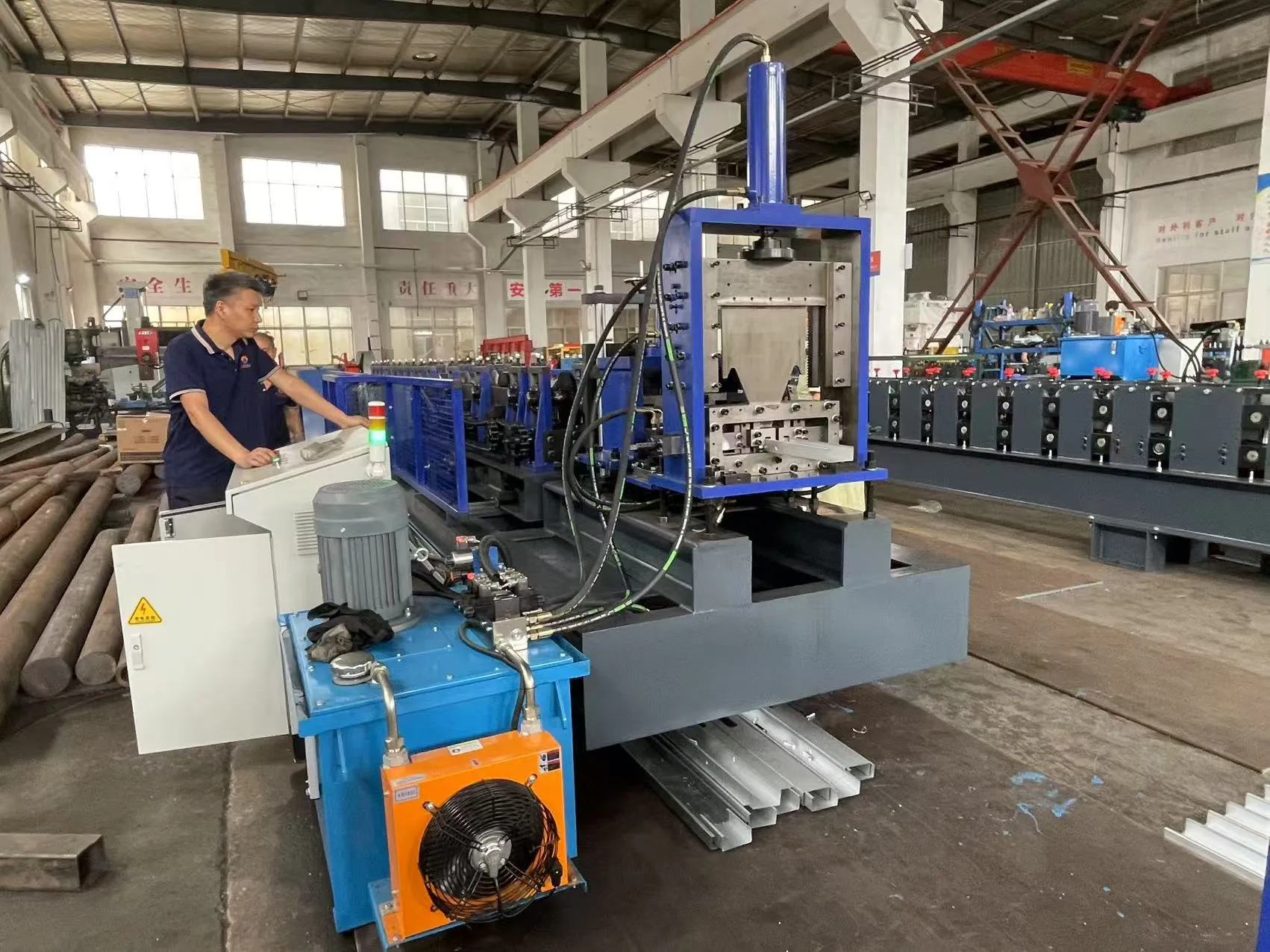
Automatic Height Adjustment Adds Another Dimension of Flexibility
Width is only one part of a CU profile.
The machine also provides automatic height adjustment from 41.3 mm to 63.5 mm.
The ability to change both width and height is important because the cross-sectional geometry of a framing profile is determined by multiple dimensions. Adjusting only one parameter would still leave manufacturers dependent on a limited range of configurations.
By combining automatic width and height adjustment, the machine is designed to accommodate a wider range of CU framing specifications.
For manufacturers, this can make the production line more suitable for custom orders or product portfolios containing several dimensions.
The practical advantage becomes more visible when production volumes for individual sizes are relatively small. A fixed machine dedicated to one low-volume profile may not always be fully utilized. An adjustable line can potentially be used for multiple products during different production periods.
This does not eliminate the need for proper machine setup or production planning. Instead, it gives the manufacturer a broader technical platform on which to organize that planning.
Why 1-2 mm Material Capability Matters
The machine is designed for material thicknesses from 1 mm to 2 mm.
Steel thickness is a fundamental variable in roll forming because it affects the force required during forming and the behavior of the material as it passes through the rolls.
When the thickness changes, the forming conditions also change. The roll forming tooling must guide the material progressively while maintaining the required profile geometry.
This is particularly important for steel framing products, where dimensional accuracy affects how studs and tracks fit together during installation.
A CU system is not simply a decorative metal profile. The stud and track must work as a framing system. If the dimensions are inconsistent, assembly can become more difficult and downstream construction operations may be affected.
For this reason, roll forming equipment needs to maintain stable forming performance while accommodating the specified material range.
The 1-2 mm capability of this machine gives the Mexican customer flexibility in selecting material according to the intended product specification.
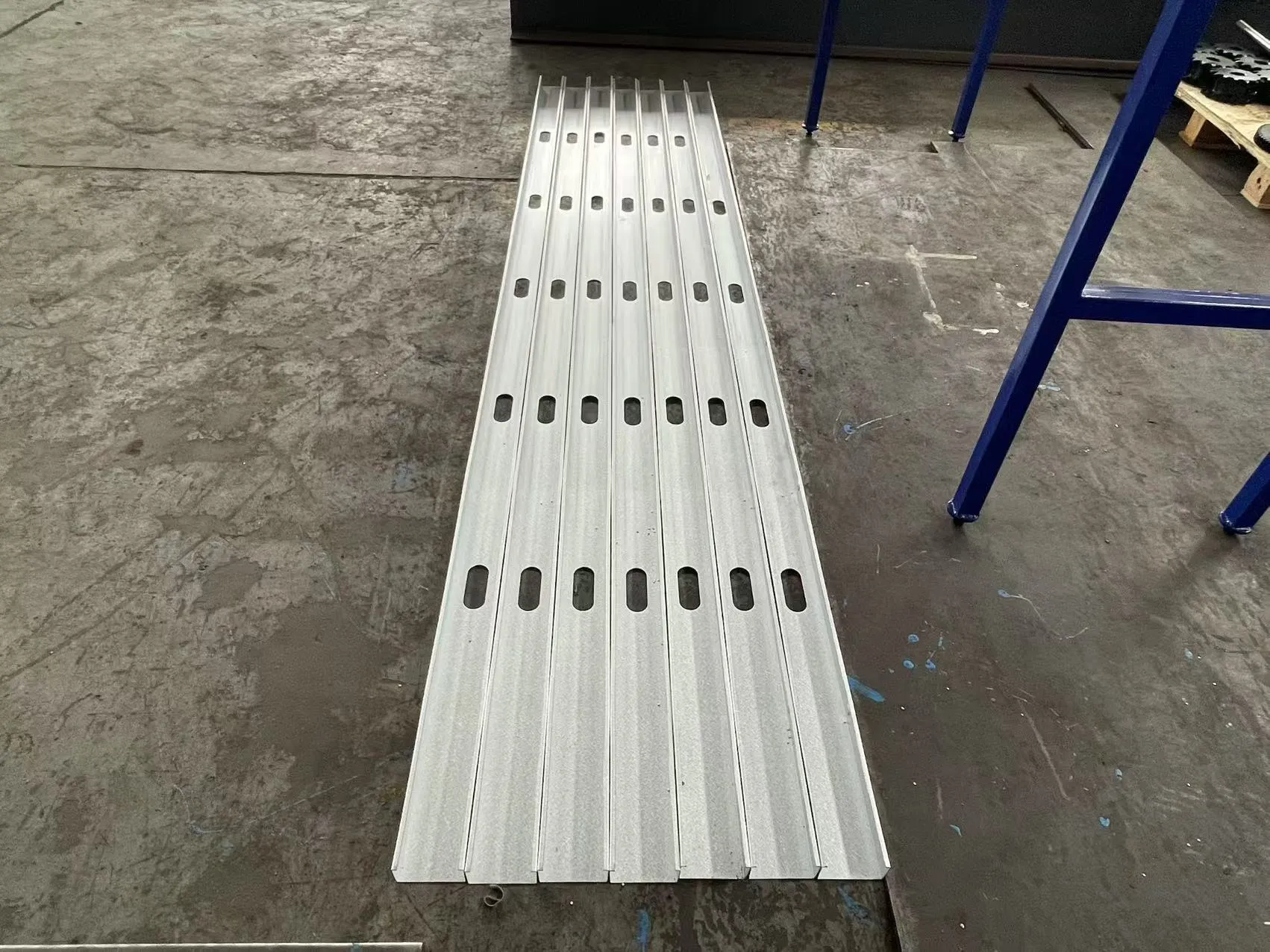
The Engineering Behind Adjustable Roll Forming
Automatic adjustment in a roll forming machine requires more than moving one component from one position to another.
A roll forming line contains multiple forming stations. The steel strip enters the machine and is progressively bent as it travels through each station. The final profile is the result of the combined forming actions of the entire line.
When the target dimensions change, the forming geometry needs to remain coordinated.
This is why adjustable roll forming equipment requires careful mechanical and control-system engineering.
The adjustment system must allow the forming components to move to the required positions while maintaining the correct relationship between different forming stations. At the same time, the steel must continue to enter the machine correctly and remain properly guided.
The objective is to make dimensional changes practical without turning every product change into a major mechanical reconstruction.
For production managers, this distinction is important. A machine is only genuinely flexible if the adjustment process is repeatable and suitable for real factory operations.
Production Flexibility and Factory Space
Another consideration is factory space.
If a manufacturer wants to produce six different framing dimensions using six dedicated machines, the total footprint can become substantial. Each machine requires not only floor space but also access for coil loading, finished-product handling, maintenance, electrical installation, and operator movement.
An adjustable machine can potentially consolidate several production requirements into one line.
This does not mean that every manufacturer should replace fixed machines with adjustable equipment. High-volume factories may still benefit from dedicated lines for individual profiles because fixed machines can be optimized around continuous production of a specific product.
The value of adjustable technology is particularly apparent when product variety is important.
Manufacturers supplying multiple markets, distributors, contractors, or project-based customers may benefit from having a production line capable of covering several dimensions.
Mexico as the Destination for the New Machine
The machine currently being prepared for shipment is destined for Mexico.
Mexico's construction supply chain includes manufacturers, distributors, contractors, and fabricators serving residential, commercial, industrial, and infrastructure-related projects. Within this environment, steel framing products can be produced locally and supplied according to regional demand.
For a local manufacturer, having roll forming equipment available domestically can provide greater control over production schedules and product availability.
Instead of depending entirely on imported finished profiles, a manufacturer with its own production line can purchase steel coil and convert it into finished CU studs and tracks according to its own requirements.
The ability to change profile dimensions adds another layer of control.
A manufacturer can develop a broader product range around one production platform, depending on its market strategy and machine configuration.
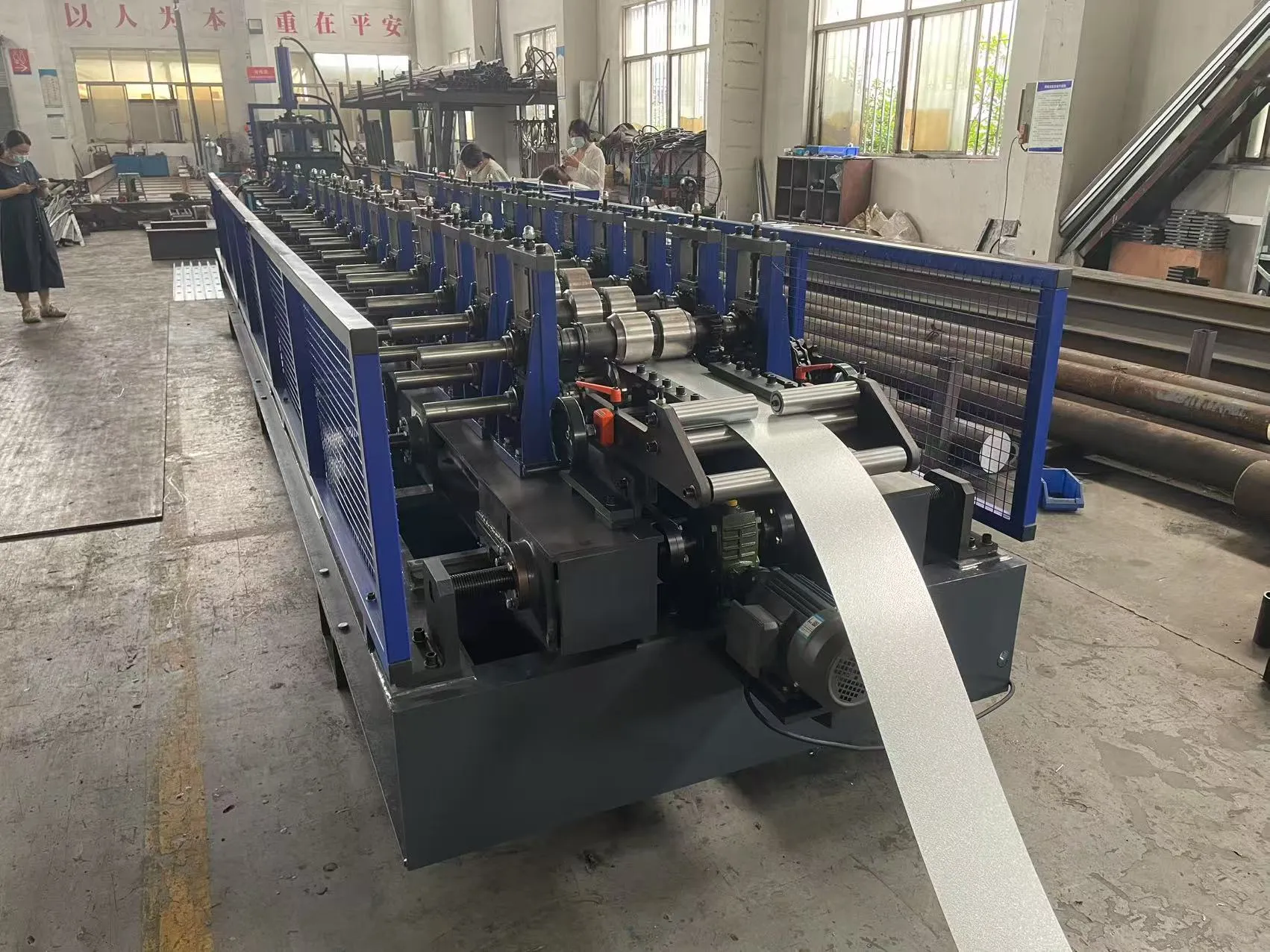
From Steel Coil to Finished CU Stud and Track
The basic manufacturing concept of roll forming is continuous.
Steel coil is introduced into the production line and guided through the forming system. The material is progressively shaped until it reaches the required CU stud or track geometry.
The finished profile can then be cut to the specified length and transferred for collection, bundling, storage, or further processing.
This process differs significantly from manufacturing methods based on individually cut steel pieces. Roll forming is specifically suited to long, repetitive metal profiles because the forming operation can continue as long as material is supplied.
For drywall framing manufacturers, this production method offers a logical combination of continuous processing and dimensional standardization.
The key challenge is then to make the machine flexible enough to support the required product range without compromising the stability of the forming process.
That is the role of the adjustable design.
What This Shipment Represents for Roll Forming Technology
The September 16 shipment from Sussman Machinery to Mexico provides a practical example of how roll forming equipment is evolving beyond single-profile production.
The machine is not defined by one fixed CU dimension. Instead, its configuration is based on a range of dimensions:
- Width: 90-203.2 mm, automatically adjustable
- Width in inches: approximately 3-1/2 to 8 inches
- Height: 41.3-63.5 mm, automatically adjustable
- Height in inches: approximately 1-5/8 to 2-1/2 inches
- Material thickness: 1-2 mm
The significance of these numbers is their combined effect.
A broad adjustable width range alone would not provide the same level of flexibility. Similarly, height adjustment alone would not cover enough product configurations. The combination creates a machine platform designed around multiple CU stud and track dimensions.
The Logistics Behind the Technology
On September 16, the equipment was being loaded into a container at the factory.
Container loading is an important stage for heavy industrial machinery because the equipment must be positioned and secured properly before transportation. After factory loading, the container will move to Shanghai Port and enter the international shipping process before continuing to Mexico.
For an industrial manufacturer, international delivery is closely connected with production planning. The machine must arrive at the customer's facility in a condition suitable for installation and commissioning.
Therefore, machine manufacturing, quality inspection, packaging, container loading, port transportation, and ocean shipping are interconnected stages of the same project.
The September 16 loading operation represents the completion of the factory production stage and the beginning of the international logistics stage.
Looking Beyond One Machine
The significance of an adjustable CU stud and track roll forming machine goes beyond its individual shipment.
Steel framing manufacturers increasingly operate in environments where product variety and production responsiveness can be as important as basic production capacity. Customers may not always require thousands of tons of one identical profile. Instead, they may require several dimensions for different construction projects.
Equipment that can accommodate these variations can become an important part of a manufacturer's production strategy.
The machine being shipped to Mexico demonstrates this concept through its automatic dimensional adjustment. With a width range of 90-203.2 mm, a height range of 41.3-63.5 mm, and material thickness capability from 1 mm to 2 mm, it is designed to support multiple CU stud and track configurations on one production platform.
As the machine leaves the factory and begins its journey from China to Mexico, the project moves from equipment manufacturing into practical application. Once installed, its real value will be measured through production: how efficiently it handles different dimensions, how consistently it forms steel, and how effectively it supports the customer's product requirements.
For modern drywall framing manufacturers, that combination of dimensional flexibility, continuous roll forming, and multi-size production capability is becoming an increasingly important consideration when selecting equipment.
.webp?x-oss-process=image/resize,w_100/quality,q_100)
Related News


Contact US
Product Information
Quantity
Unit
Piece
Support order samples, customization, wholesale direct, and complete payment. If the product you look for does not have corresponding customized content, pls fill out the form below to contact us, and we will reply ASAP.