-
tel:
+86-13606193016 -
email:
info@suhangmachine.com

How Local Building Codes Influence Steel Profile Requirements
Oct 29, 2026
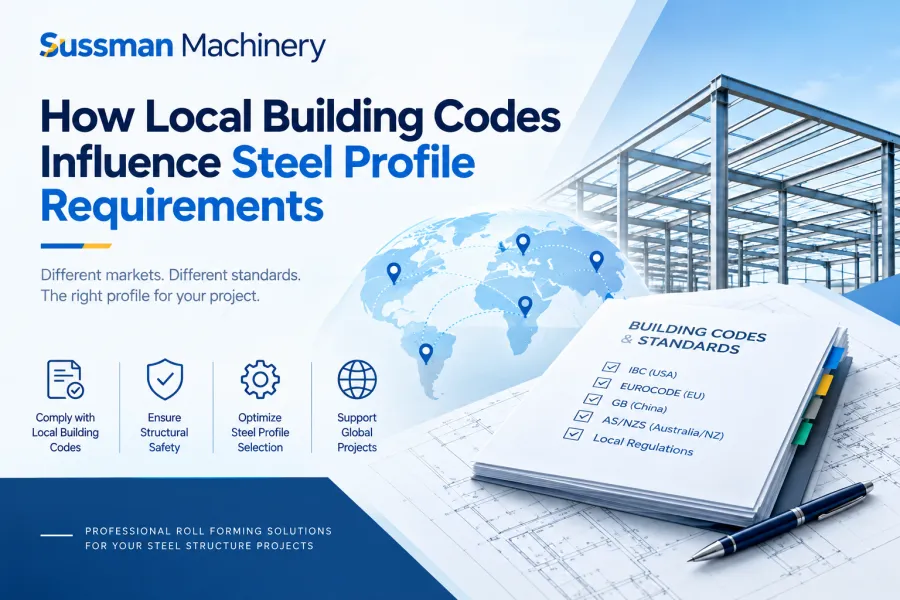
How Local Building Codes Influence Steel Profile Requirements
Steel profiles used in residential, commercial, and industrial construction must meet the requirements of their intended applications. When manufacturers supply products to overseas markets, they may also need to consider differences in building codes, material standards, structural design practices, and project specifications.
For companies producing light gauge steel framing, C and Z purlins, metal roofing panels, and other cold-formed steel components, understanding these requirements is an important step in planning production.
1. Building Requirements Can Differ Between Markets
Different countries and regions may apply different standards to structural steel materials, member design, connections, and building performance.
For example, projects in the United States may reference the International Building Code and relevant cold-formed steel design standards. European projects may follow applicable Eurocodes and national provisions.
The exact requirements depend on the country, project type, applicable regulations, and the role of the steel component in the structure.
Manufacturers should therefore confirm the applicable standards with their customers, structural engineers, or local compliance professionals before finalizing product specifications.
2. Profile Dimensions Must Match the Project Design
A steel profile's appearance alone does not determine whether it is suitable for a building project.
Important design parameters may include:
-
Web depth and flange width
-
Lip dimensions and bend radii
-
Material thickness
-
Steel grade and mechanical properties
-
Hole positions and connection details
-
Required dimensional tolerances
These parameters influence the profile's structural behavior, compatibility with adjoining components, and suitability for the intended application.
For roll forming equipment manufacturers, accurate profile drawings help establish the tooling design and production requirements.
3. Material Specifications and Traceability
Building projects may specify particular steel grades, mechanical properties, coating requirements, or material standards.
Manufacturers should clarify which material specifications apply before production begins. Depending on the project, buyers may also require material certificates, inspection records, or other documentation to support quality assurance and traceability.
It is important to distinguish between producing a profile to specified dimensions and demonstrating that the finished component complies with all applicable structural requirements.
Compliance may involve additional engineering calculations, testing, documentation, or independent assessment beyond the manufacturing process itself.
4. How These Requirements Affect Roll Forming Equipment
The intended steel profile and its material specifications directly influence the machine design.
For example, changes in profile geometry may require different roller tooling. A different material thickness or steel grade may affect forming forces and machine configuration. Specific hole patterns may require corresponding punching tools and positioning arrangements.
Before ordering a customized roll forming machine, buyers should prepare:
-
Approved profile drawings
-
Material grade and thickness specifications
-
Required production tolerances
-
Punching and connection-hole details
-
Applicable project or product standards
-
Expected production volume and product range
Providing this information early helps the equipment supplier assess the required configuration and identify questions that need technical clarification.
5. Communication Between Buyers and Equipment Manufacturers
International machinery projects involve more than confirming a profile's overall dimensions. Both parties should establish a clear understanding of the intended application and the technical requirements that the production line must satisfy.
Buyers should identify the standards relevant to their products, while equipment manufacturers should confirm the machine's capabilities and limitations against the agreed specifications.
Where certification or regulatory compliance is required, responsibility for product design approval, testing, and documentation should be clarified before the project proceeds.
Conclusion
Local building codes and project specifications can influence steel grades, profile dimensions, connection details, tolerances, and documentation requirements.
For manufacturers supplying steel framing components, purlins, and other cold-formed profiles, confirming these requirements before production helps reduce misunderstandings and supports more effective project planning.
Sussman Machinery provides roll forming equipment solutions based on customer profile drawings and production requirements. Customers planning projects for overseas markets are encouraged to share their technical specifications at the beginning of the inquiry.
Contact Sussman Machinery to discuss your required profile dimensions, material specifications, and roll forming production needs.

Related News

October 26, 2016
The Most Successful Engineering Contractor

Contact US
Product Information
Quantity
Unit
Piece
Support order samples, customization, wholesale direct, and complete payment. If the product you look for does not have corresponding customized content, pls fill out the form below to contact us, and we will reply ASAP.