-
tel:
+86-13606193016 -
email:
info@suhangmachine.com

How to Choose the Right Roll Forming Machine for Your Business
Nov 19, 2026
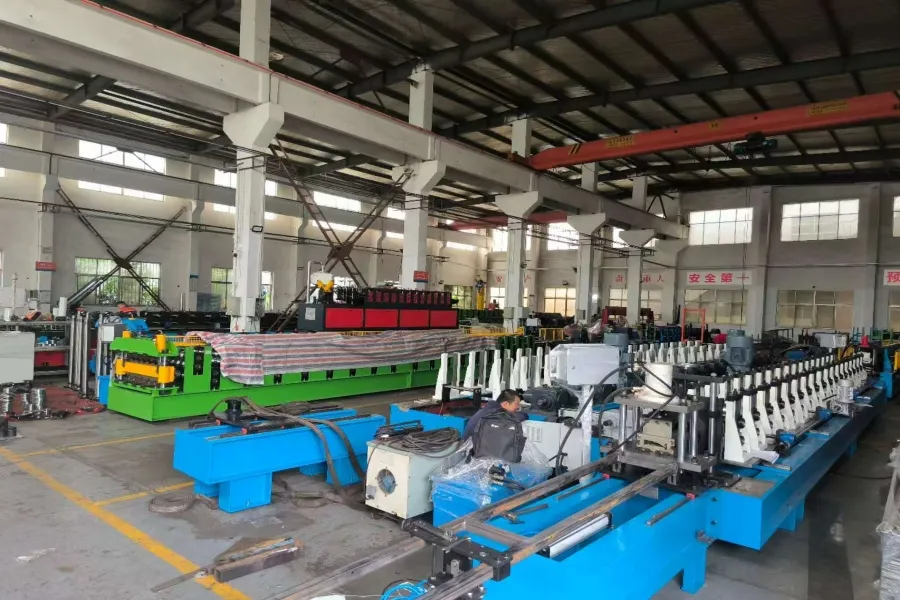
Investing in a roll forming machine is an important decision for any metal processing or construction material business. The right equipment can improve production efficiency, reduce labor costs, maintain product quality, and help your company expand into new markets.
However, with so many types of roll forming machines available, how do you choose the right one for your business? Before making a purchase, there are several key factors worth considering.
1. Identify Your Target Products
First, determine which metal profiles you plan to manufacture. Different products require different roll forming machines, such as roofing panels, C and Z purlins, metal studs and tracks, light steel framing components, or roller shutter door slats.
You should also research local market demand and your potential customers. Choosing a machine based on actual market needs is a better starting point than investing in equipment without a clear sales plan.
2. Confirm Profile Specifications
The profile drawing is essential when selecting a roll forming machine. Dimensions such as profile height, width, flange size, lip dimensions, and bending angles determine the roller design and machine configuration.
If you have a profile drawing, send it to the manufacturer for evaluation. If you only have a sample or photograph, providing accurate measurements can also help the manufacturer understand your requirements.
3. Choose the Suitable Material Thickness
Different machines are designed for different material thicknesses. A machine for thin roofing sheets cannot necessarily process thicker structural steel.
Before ordering, confirm the material type, thickness range, and strength requirements. These specifications affect the machine frame, rollers, shafts, motor power, and cutting system.
Choosing the correct machine capacity helps avoid unnecessary investment and potential production problems.
4. Consider Production Capacity
Think about how much you need to produce every day or every month. If you handle large orders, a higher-speed production line with automatic cutting and stacking may be beneficial.
However, maximum speed is not everything. Stable operation, forming accuracy, product quality, and ease of operation are equally important.
Choose a machine that meets your actual production requirements instead of paying extra for capacity you may never use.
5. Evaluate Automation Requirements
Modern roll forming machines can include automatic feeding, punching, length measurement, cutting, width adjustment, and stacking systems.
Automation can reduce manual work and improve efficiency, especially when producing multiple sizes or large quantities.
However, the level of automation should match your production volume, labor availability, and budget. A practical configuration is often more valuable than an unnecessarily complicated machine.
6. Check Your Budget and Factory Conditions
Besides the machine price, remember to consider shipping costs, installation, electrical requirements, tooling, spare parts, and factory preparation.
Make sure you have enough space for the complete production line, including the decoiler, forming machine, cutting section, stacking area, and finished product storage.
Before production begins, confirm your local voltage, frequency, and phase requirements with the manufacturer.
7. Choose a Reliable Manufacturer
A reliable roll forming machine manufacturer should have experience producing similar equipment and be able to understand your technical requirements.
Before placing an order, check the manufacturer's machine configuration, production experience, testing process, warranty terms, and after-sales support.
Good communication is also important. Clear technical discussions before production can help prevent misunderstandings and unnecessary modifications later.
8. Think About Your Future Business
Your machine should meet your current needs while allowing room for future development.
If you plan to expand your product range, consider whether you may need automatic width adjustment, interchangeable tooling, additional punching functions, or higher production capacity in the future.
However, flexibility should be balanced with investment costs. The best machine is the one that fits your business plan, not necessarily the one with the most functions.
Choosing the Right Machine with Sussman Machinery
Sussman Machinery manufactures roll forming machines for customers in the construction and metal processing industries, including roofing panel machines, C and Z purlin machines, CZ interchangeable machines, light gauge steel framing machines, metal stud and track machines, and roller shutter door machines.
We provide customized solutions according to customers' profile drawings, material specifications, production capacity, and factory requirements.
Whether you are starting a new business, expanding your production, or upgrading existing equipment, choosing the right machine configuration is an important step toward improving your manufacturing efficiency.
Conclusion
Choosing the right roll forming machine requires careful consideration of your target products, profile dimensions, material thickness, production capacity, automation, budget, and supplier experience.
Taking the time to evaluate these factors can help you avoid unnecessary expenses and make a better long-term investment.
If you are planning to purchase a roll forming machine, send us your profile drawing and production requirements. Sussman Machinery will be happy to help you find a suitable solution for your business.
Related News

October 26, 2016
The Most Successful Engineering Contractor
Contact US
Product Information
Quantity
Unit
Piece
Support order samples, customization, wholesale direct, and complete payment. If the product you look for does not have corresponding customized content, pls fill out the form below to contact us, and we will reply ASAP.